Why board meetings spike your cortisol
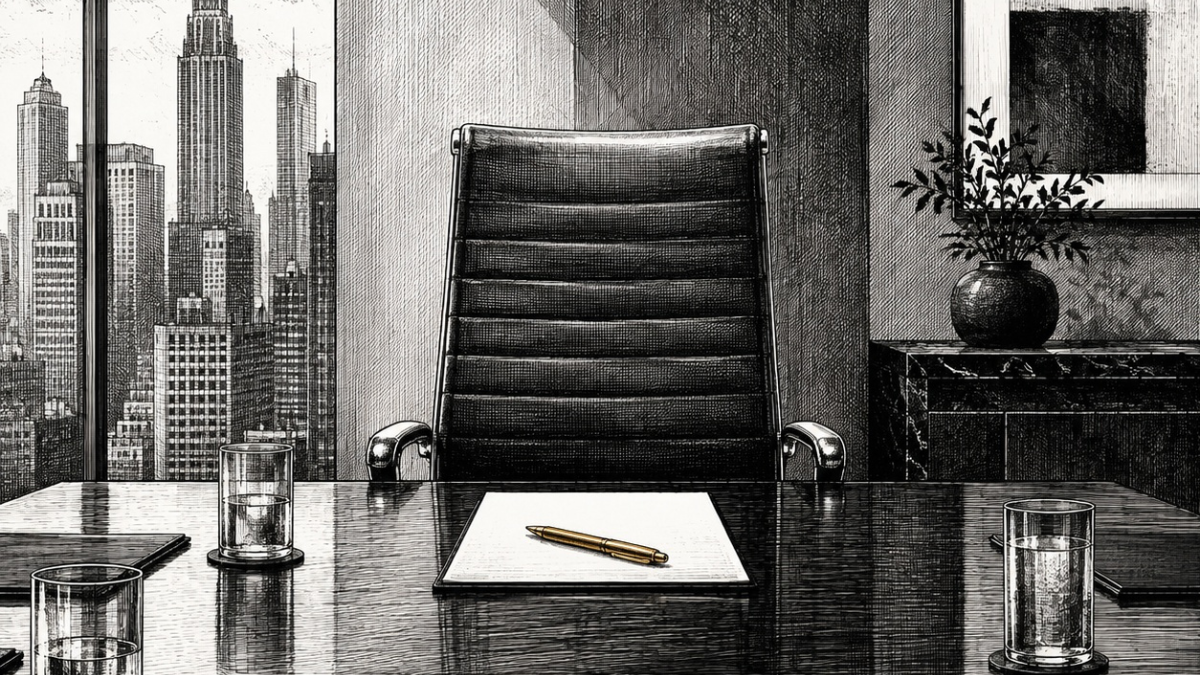
How many times have you left one of those all morning meetings with a woolly head and the patience of a bear?
You have sat across a table from someone privately and found them sharp, reasonable, easy to read. Put the same person in a boardroom ninety minutes later and something changes. The patience goes first. Then the attention. By the final agenda item the room is running on fumes, and everyone in it would tell you, honestly, that nothing about the subject matter justified the mood shift. They are right. It was not the subject matter.
Demand minus capacity
What actually happens in a boardroom is best understood as a sum, not a single event. Perceived demand is the demand in front of you minus whatever capacity you are bringing to meet it. Most people assume a difficult meeting is difficult because of what is being discussed: the number being defended, the challenge from a peer, the case being argued for budget. That is real demand, and it matters. But it is only half the sum.
The other half is capacity, and the room itself has usually been quietly spending yours for the better part of an hour before that difficult moment ever arrives. By the time the actual demand of the meeting shows up, defending the number, holding your ground under challenge, reading the room while three people disagree with you at once, there is less capacity left to meet it than anyone walking in assumed. The meeting was never just the meeting. The room got there first.
What the room is actually doing
Start with timing. Board meetings cluster between ten and noon, which sits on the tail of the natural cortisol awakening response, the rise that gets you up and moving in the first place. Nobody in that room walked in neutral. The baseline was already elevated before the door closed.
A coffee break can feel like a saving grace when things are grinding and earns its place on plenty of counts. The issue is timing and company. It arrives at the exact hour cortisol is already running high, and pushes it higher again. Studies have shown that the equivalent of two or three cups has cortisol climbing by around 30% within the hour.[1] The so called healthy biscuits beside it compound the issue with a glucose spike then crash which causes another release of cortisol and adrenaline to fix the energy drop, often landing at the precise moment the discussion turns adversarial.
Air is the part almost nobody accounts for. Close the doors, fill the seats, and the room quietly banks up carbon dioxide, and a packed meeting room is the worst offender going. Once it climbs past the level where clear thinking measurably slips, the sharpest fall shows up exactly where a boardroom lives or dies, in strategic thinking and sound decisions.[2] The air conditioning is only managing temperature. Cold air is still the same recycled air, and the room gets harder to think in by the minute while everyone assumes it is simply where the meeting happens to be held.
Add lighting that is both too dim for the brain to register as daytime, most offices sit at 300 to 500 lux against tens of thousands outdoors[4], and completely flat in colour temperature from nine until five, giving the body no contrast to read time of day from. Add phones on silent that are still being monitored under the table, a small continuous demand that never fully switches off, plus the quiet heat they add to an already sealed room. None of this arrives as a single event. It accumulates, in a room everyone agreed was simply where the meeting happened to be held.
Why it bounces instead of settling
A healthy response to challenge rises and falls. Someone pushes back on your number, cortisol spikes to meet it, the exchange resolves, cortisol comes back down. That fall is what allows the next challenge to be met cleanly, on its own terms, rather than on top of whatever is still sitting there from the last one. It is the same rhythm as the Stress Bucket model[3], compressed here from weeks into ninety minutes with the doors shut.
When capacity has already been eroded before the first real challenge lands, that fall is incomplete. The next spike stacks on a slightly higher floor than the one before it. By the final agenda item, the floor has climbed considerably higher than where the room started, and nothing about the conversation itself explains the shortness of temper or the fraying attention everyone can feel but nobody names. That is the fraying edge people describe afterwards, and the contrast people notice, without quite being able to say why, when they meet the same colleague one-on-one instead. Outside that room, without the accumulated load of the previous ninety minutes, there is simply more capacity available to meet whatever is actually being discussed.
The room is not neutral
None of this is about the people in the room lacking resilience, and it is not solved by asking them to prepare better or arrive calmer. The room itself is doing measurable work on capacity before anyone has said a difficult word. Understanding that changes what is worth adjusting, and it is rarely the agenda.
Now you might be raising an eyebrow and thinking if I am so smart what is the answer. Unfortunately, throwing open all the windows is normally not an option in your hermetically sealed buildings even with all the carbon and UV filters that are supposed to be state of the art. Nor is moving the board meeting to the green park a short walk from the building. Whilst it would lower your cortisol, and boost your vit D, and undoubtedly the wifi would still connect to all your gadgets and laptops, half the room would be distracted by squirrels, the weather would no doubt either rain on your parade or bake you alive, and running a meeting from the available cover would mean competing with the next office for every patch of shade. And right on cue, a butterfly would land on your laptop, just to point out that nature is wonderful and the boardroom is deliberately built without any of it.
For me as a coach, it would be amusing to watch and it certainly would do wonders for kickstarting your curiosity and inventiveness drive, but sadly, not the solution any company would adopt. So what is the solution? Maybe that is something that should be added to the next agenda.
Before your next board meeting, look at three things you can actually control. Can the room be aired before people arrive, even five minutes with the door open. Can the coffee wait until after the first agenda item rather than landing right as cortisol is already peaking on its own. Can you get two minutes of daylight before you walk in, rather than moving straight from one indoor room to another.
None of that changes what needs discussing. It changes how much capacity is left in the room to discuss it well.
If you want more of the science, you might find the HPA axis interactive section in the Nerd Vault useful.