You Named It Before You Saw It
Someone I follow, who spends her working life reading landscapes rather than spreadsheets, wrote an article that had nothing to do with burnout yet to me had everything to do with it.
If you take a woodland walk with friends who know their trees, they’ll name the wren, the oak, the linden or the woodland flora before they have even looked at it. They have it imprinted.
By the time you’ve named something, the looking has already stopped. Pattern recognition at its simplest. You’ve filed it, moved on, kept the world manageable.
The email was about nature, about the assumptions we make before we’ve actually looked. I remember thinking how apt it was applied to people under chronic pressure, the daily load where the personal, the professional, and just being alive are all taking from your capacity to juggle the lot effectively.
It’s not the cortisol, it’s the frequency
And even in that description, I have automatically used pattern recognition, the curious part of me thinking about how it is seen in other areas and applying it to you. How you react when the pressure keeps chipping away, and how you perceive information changes as pattern recognition is tempered with emotional load rather than logic.
The demands that preceded the feelings of foreboding that made your heart beat faster when you opened an email from someone that you know can be difficult might not have been that significant. It could have been a bunch of irritating oversights that you have to deal with that were not yours to start with combined with the commute into work being extra challenging, following on from the meeting you had last night where nothing concrete had been finalised. Nothing major but a series of persistent stressors that have kept cortisol riding high in your system that your body and brain do not like.
It’s not cortisol that’s the problem, it’s the frequency it’s been asked for to meet the demand to do something. And as things start mounting up, logical thinking becomes more challenging as pattern recognition starts firing on assumptions. The nervous system starts to treat this as if it is a threat and fires off the responses that release adrenaline and noradrenaline to get you moving while cortisol is released to sustain the momentum, release energy reserves to fuel your responses and depending on how often these hormones are being released, directly impacts how you can manage the demands.
This is about capacity
Whilst the message itself will have an emotional response depending on how rude it is, how big the ask is, or whether it feels like there is something else going on, it isn’t what decides whether it lands as mildly annoying rather than setting your heart racing or allows that little anxiety driven, paranoid voice to ramp up the catastrophe volume. Two people can get the same difficult email, one reads it and moves on within a minute with an eye roll and a clean response forming whilst someone who is going through a period of constant duress that has severely reduced their capacity, ending up with a full blown stress response before they’ve finished the first line.
Your capacity to manage the demands of life, work and homelife, and whether it has been eroded is the essential factor. There’s research showing this directly: put someone under sustained pressure and show them something ambiguous, and they’ll read it as worse news than someone whose system is calmer.[1] The situation was identical. Only the interpretation changed.
The content whether it is from a challenging client, a risk that has been escalated, a person who always brings a cartload of issues, or, a decision nobody else wants to make. What’s been fudged is the thing you’ve always trusted without thinking about it: your own interpretation being warped by the threat model that is looking for patterns you need to firefight even when there is no smoke.
And this is not about you, your intellectual ability. This is about capacity.
Capacity is always in flux
This has nothing to do with being dependable, made of stern stuff, or being cold as ice when it comes to business. Our capacity is always in flux, having an accumulation of past events lodged in there, that rises and falls as the load we take on asks stuff from every facet of our existence. Leaving stuff at the threshold when we close the door, whether that is personal or professional, is not as simple as we would like to believe. And this is because electronically and digitally the two worlds are meshed. The work email that comes in at 2am will play on your mind whether you like it or not. How many of us turn off the phone when we get home? The state of the world plays havoc with every aspect of our lives and we are still scrolling the news or socials well into the evening rather than allowing ourselves to unwind.
Then there is the microscopic world that we cannot avoid, and even a simple cold can upset the apple cart if it is the one thing that adds more pressure than our capacity can take at that moment in time.
This is before burnout, not after
This isn’t the account of what happens after someone burns out. This is on the journey that leads to it, the stuff that you notice happening and question your abilities to do your job, your motivation, your enthusiasm, your confidence, your focus blunted, your recall slipping, growing fatigue.
These are just a few of the symptoms that are warning you that your capacity has been depleted and you are now in a pattern recognition mode that has more to do with emotional reactions rather than logical rationalisation. This is threat analysis that has nothing to do with logic.
None of that means the mechanism is broken. The cascade is doing exactly what it was built to do, but without the signal to stand down it needs to allow you to reset. You are responding to continuous demands, a load that has left your system running on less capacity than it needs. Which is a different problem than the one most people think they have. The patterns you are automatically accepting are a direct response to a system that needs to pull the brakes so everything can pause and regain the regulated cycle it needs.
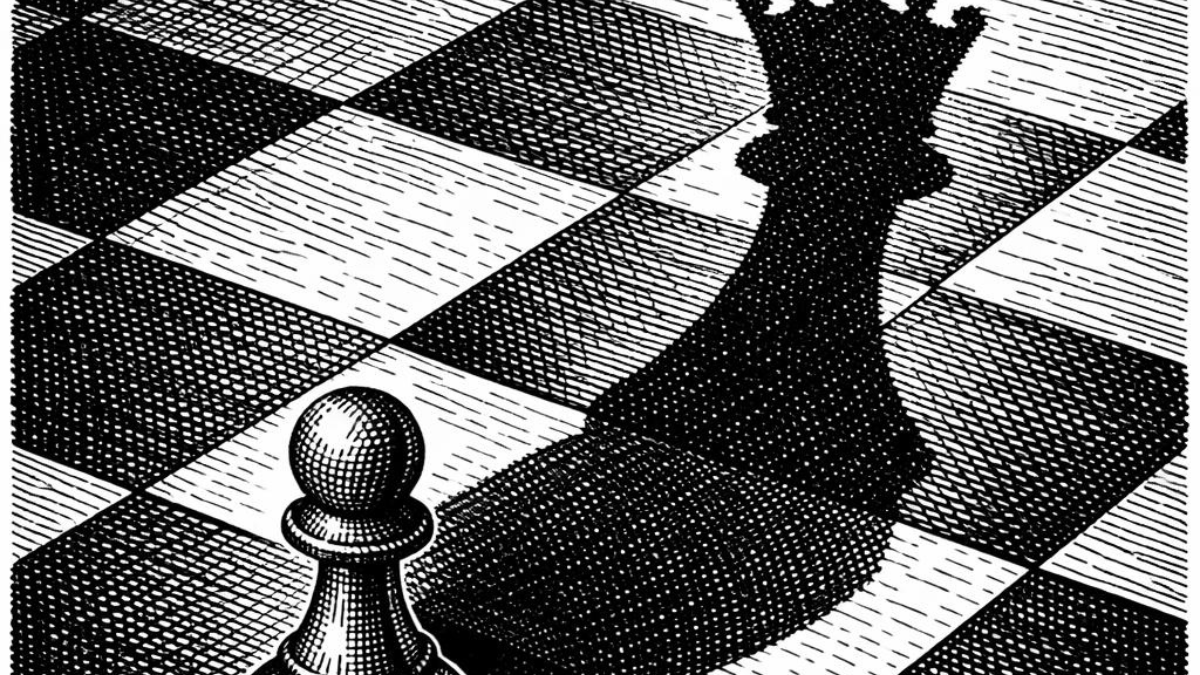
Life is always going to throw demands at you. That goes without saying. But a body and mind that is being exposed to a lifetime of accumulated hormonal challenges is going to have a nervous system that becomes dysregulated and in the same way that sudden movement in the shadows causes that feeling of heightened awareness when walking in the woods, a heightened threat mode has you looking for shadows, for patterns in words, messages, communications, language.
Fortunately, this is not a one way street. Recognising the patterns and becoming aware and open to the idea that thoughts are automatic starts to slow the spiralling thoughts. Asking whether those imagined scenarios are on point or needs challenging can help you to decide whether to accept your initial interpretation or maybe ‘sleep on it’ and get a fresh perspective or clarification. Just giving yourself some mental space can start taking the pressure off when checking your phone, inbox or heading into that appointment or meeting.
Think about the last time you felt that dread rising when you saw something in your inbox or a message flash up on your phone. Had you already decided what the content was before you even opened it? How did you interpret the contents of that message or email? Did you misread it? Did it read differently if you read it later? Or if the content was as you expected how did you manage it?
So often, we interpret words differently to what the sender intended, especially if we are going through a challenging or intense period professionally or personally.
If you want to see how demand and capacity actually interact, day to day, there’s an interactive diagram for it in the Nerd Vault.